

Creatine: The Essentials
Creatine 101
At a glance: Creatine is a compound your body already makes and stores, almost all of it in muscle. It helps your muscles quickly recharge their energy during short, intense efforts like heavy lifts, sprints and jumps. A normal diet keeps your muscle stores steady but only partly full. Supplementing fills them the rest of the way. Combined with resistance training, that lets you do more work, and over time more work builds strength.
What creatine is
Creatine is a naturally occurring compound that your body makes from three amino acids, glycine, arginine and methionine, and that you also get from animal foods (19).
About 95% skeletal muscle
The remaining 5% or so in other tissues, including the heart, brain and testes
Where it comes from
Your body gets creatine from two sources.
- Your body makes it. Your liver, kidneys and pancreas produce about 1 to 2 grams a day (2). It is a two-step process: arginine and glycine are combined into a compound called guanidinoacetate, which is then converted into creatine using a methyl group supplied by methionine (20). Most guanidinoacetate is made in the kidneys and then converted into creatine in the liver (21).
Most guanidinoacetate is made in the kidneys
then converted into creatine in the liver
Your body is also constantly breaking creatine down. Each day about 1.7% of your total supply turns into a waste product called creatinine, which your kidneys remove (8, 2). People with more muscle and higher activity levels break down more (21). Depending on how much muscle you have, about 1 to 3 grams has to be replaced every day just to stay level (20).
Your body makes it about 1 to 2 grams a day
Your diet supplies it mainly from red meat and fisha diet that includes them provides about 1 gram a day
Each day about 1.7% of your total supply turns into a waste product called creatinine, which your kidneys remove
About 1 to 3 grams has to be replaced every day just to stay level depending on how much muscle you have
What you make and eat covers that daily loss, but it does not raise your stores. About 1 gram a day is enough to prevent a decline, while 3 to 20 grams a day is needed to raise muscle creatine above its normal level (2). For scale, a 5 gram serving contains as much creatine as about 2.4 pounds of fresh, raw steak (15).
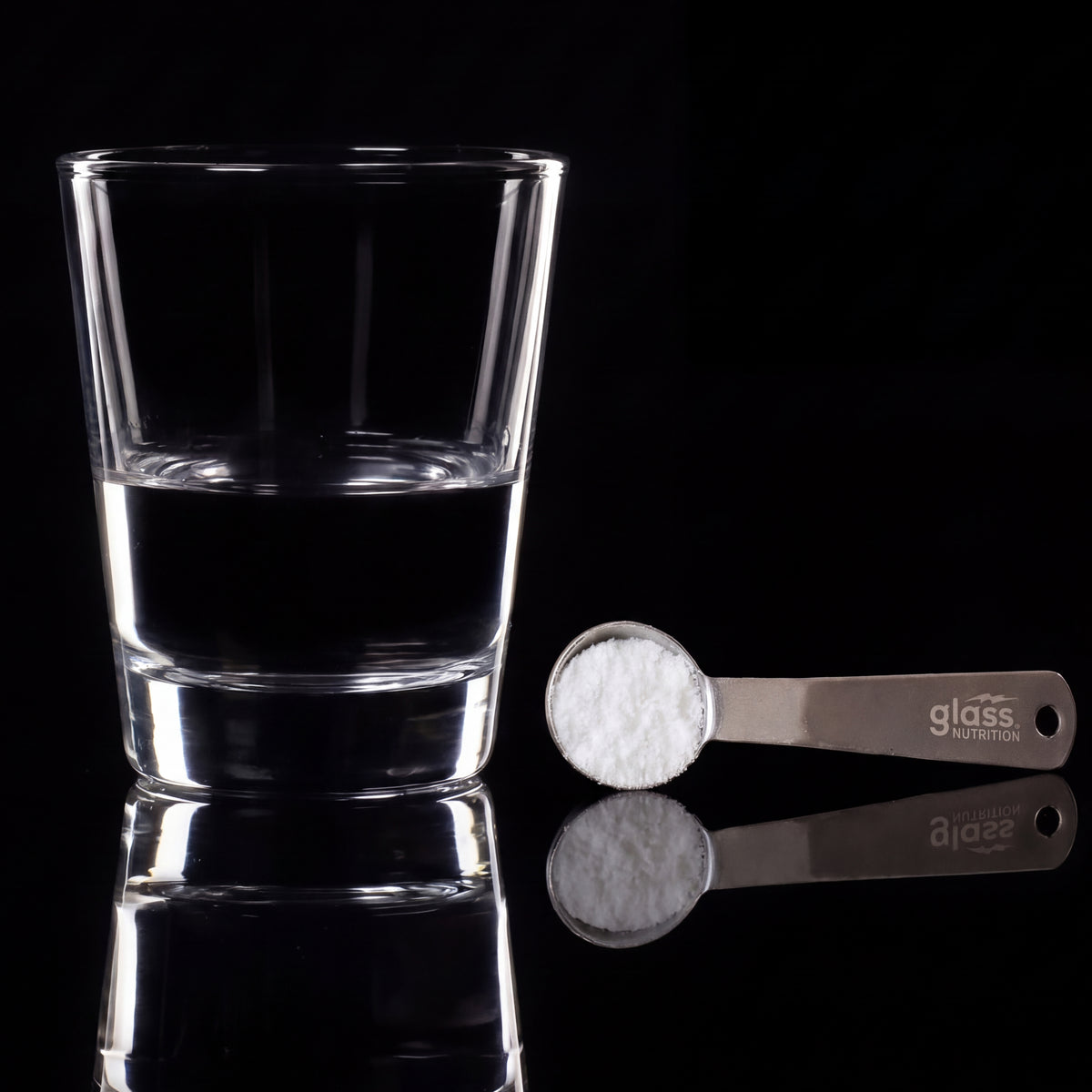
a 5 gram serving
as much creatine as
about 2.4 pounds of fresh, raw steak
How it works in your muscles
Your muscles run on a molecule called ATP. Every muscle contraction spends some of it. Inside the muscle, creatine is combined with phosphate to form phosphocreatine, and an enzyme called creatine kinase uses phosphocreatine to rebuild ATP quickly. This helps keep ATP available during maximal, sprint-type efforts (20).
Every muscle contraction spends some of it
Your muscles hold only limited amounts of ATP and phosphocreatine. They can release energy very quickly, but a single intense effort uses them up, and slower energy systems take over as the effort continues (12).
Think of ATP as the cash in your hand and phosphocreatine as the cash in your pocket. You spend what's in your hand almost immediately. The cash in your pocket keeps you going while your body's slower energy systems catch up.
Filling the tank. Muscle creatine stores are not completely full on either a vegan or a typical meat-eating diet (21). On a normal diet, they are about 60 to 80% full. Muscle has an upper limit of about 160 mmol per kilogram of dry muscle, and supplementing fills the gap up to that limit (20). As your stores fill, more and more of each dose is simply passed out in urine (15). You don't need a high-dose "loading" phase: 3 grams a day for about four weeks raises muscle creatine about as much as a week of high doses (16). If you stop taking it, in about four to six weeks your stores will gradually return to their starting level (16, 20).
On a normal diet
about 60 to 80% full not completely full on either a vegan or a typical meat-eating diet
Supplementing
fills the gap up to that limit an upper limit of about 160 mmol per kilogram of dry muscle
more and more of each dose is simply passed out in urine
If you stop taking it
in about four to six weeks stores will gradually return to their starting level


What the research shows
-
More strength when you train. The European Food Safety Authority has concluded that creatine combined with resistance training improves muscle strength in adults over 55. The evidence behind that conclusion involved at least 3 grams a day, with resistance training three times a week for several weeks at an intensity of at least 65 to 75% of your one-rep max (11).
-
More quality work per session. By increasing the energy available during heavy efforts, creatine can help you do more reps and more total work. Over a training period, that extra work adds up to better performance (1). Creatine does not lift the weight for you. It helps you get the extra rep, and the extra rep, repeated over months, is what changes your body.
-
Better high-intensity performance. More than three decades of research show consistent improvements in high-intensity exercise performance, training adaptations, lean mass, strength and power (19). An independent review that graded many popular sports supplements gave creatine its highest evidence rating (level A) for increasing or preserving muscle mass and strength. Most of the other supplements it reviewed received lower ratings (32).
-
Support for strength as you age. A pooled analysis of 22 trials in 721 adults with an average age of 57 to 70 found that those who took creatine while resistance training gained about 1.4 kg (3 lb) more lean mass than those who trained with a placebo. They also gained more upper- and lower-body strength (6). A newer 2026 analysis of 11 trials in adults 60 and older confirmed a small strength benefit, but found the added effect on muscle mass uncertain (34).
-
One of the most studied supplements available. Pooled analyses from hundreds of clinical trials found no more side effects with creatine than with a placebo (19). In one analysis of clinical trials, side effects were reported by 4.6% of people taking creatine and 4.2% of people taking a placebo, a difference that was not significant (22). The only consistently reported side effect is weight gain (20), partly because creatine increases the amount of water your body holds (26, 28, 1).
Is creatine safe for your kidneys?
This is one of the most common questions about creatine. In healthy people taking recommended amounts, controlled research has not found kidney damage or loss of kidney function (1).
Where the confusion comes from. When your body breaks down creatine, it makes creatinine, and healthy kidneys filter creatinine out of your blood. That is why doctors use blood creatinine as a marker of kidney function. Taking creatine, or eating meat, can raise creatinine levels, so a blood test can look like a kidney problem when there isn't one (1). Much of the concern traces back to a 1998 case report of a man with long-standing kidney disease whose creatinine rose while he was taking creatine (1).
What the trials show. In pooled analyses of clinical trials, creatine slightly raised blood creatinine but did not change blood urea or estimated kidney filtration rate (eGFR) (31, 25). An analysis of clinical trials found no difference between creatine and placebo in reported side effects, including markers of kidney function (22). Intakes of up to 30 grams a day for five years have been reported as safe and well tolerated in healthy people (20). Researchers have called for more trials lasting longer than one year (31).
What this means for you.
- Tell your doctor you take creatine before blood work. That way a higher creatinine result can be read in context (1).
- Talk to your doctor first if you have kidney disease or take medications that affect your kidneys. The reported cases of kidney problems in people taking creatine involved existing kidney disease, medications, other supplements, very high doses or steroid use (1).
Good to know
- The benefits depend on how you train. In a pooled analysis of trials in young men, creatine improved short-burst power whether or not people were doing resistance training (14). Emerging research also suggests benefits for repeated sprints in endurance and team sports (19). Gains in lean mass, however, came when creatine was combined with resistance training (9, 14), and the strength findings above come from studies that included resistance training (11, 6).
- The effect on muscle size. When muscle is measured directly with imaging, the size gain from adding creatine to training is real but not huge (4). For those looking to optimize muscle mass, research shows it can be helpful, but it's not magic. Creatine's main benefits are strength and how much work you can do, which in turn can help build muscle (1).
- Memory and cognition (early research). Pooled analyses of randomized trials have found a small improvement in memory with creatine (33, 27). In one analysis, the improvement was seen mainly in older adults aged 66 to 76, but not in younger adults (27). A review of studies in adults 55 and older found that 5 of 6 linked creatine to better memory or attention (23), though the statistical methods of some analyses have been questioned (7).
- Bone density (early research). In a 12-month trial of postmenopausal women doing resistance training, those taking creatine lost less bone density at the hip than those taking a placebo (1.2% vs 3.9%), although only 33 women completed the study (5). Research in this area is still ongoing and is early.
Key takeaways
- One of the most studied sports supplements. Creatine received the highest evidence rating for increasing or preserving muscle strength and mass in an independent review of sports supplements (32), backed by more than three decades of research (19).
- Built for short, intense efforts. Creatine helps your muscles rebuild their energy quickly during heavy lifts, sprints and jumps (20).
- Stronger with training. Combined with the right resistance training, creatine improves muscle strength (11, 6). In young men, short-burst power improved with or without resistance training (14).
- Diet alone rarely fills the tank. Although it's possible, it's very unlikely that a normal diet fully optimizes creatine stores (21). Based upon the average diet, muscle creatine stores are about 60 to 80% full, and supplementing fills them (20). About 3 grams a day for four weeks does this without a loading phase (16).
- Muscle size gains are real but modest. The main benefits are strength and how much work you can do, which in turn can help build muscle (4, 1).
- A strong safety record. Side effects were no more common with creatine than with a placebo (19, 22). In healthy people, research has not found kidney damage, but creatine can raise creatinine on blood tests, so let your doctor know you take it (1, 31).
Sources
- Antonio J, Candow DG, Forbes SC, et al. Common questions and misconceptions about creatine supplementation: what does the scientific evidence really show? J Int Soc Sports Nutr. 2021;18(1):13. doi:10.1186/s12970-021-00412-w
- Blancquaert L, Baguet A, Bex T, et al. Changing to a vegetarian diet reduces the body creatine pool in omnivorous women, but appears not to affect carnitine and carnosine homeostasis: a randomised trial. Br J Nutr. 2018;119(7):759-770. doi:10.1017/s000711451800017x
- Burke DG, Chilibeck PD, Parise G, et al. Effect of creatine and weight training on muscle creatine and performance in vegetarians. Med Sci Sports Exerc. 2003;35(11):1946-55. doi:10.1249/01.mss.0000093614.17517.79
- Burke R, Piñero A, Coleman M, et al. The Effects of Creatine Supplementation Combined with Resistance Training on Regional Measures of Muscle Hypertrophy: A Systematic Review with Meta-Analysis. Nutrients. 2023;15(9):2116. doi:10.3390/nu15092116
- Chilibeck PD, Candow DG, Landeryou T, et al. Effects of Creatine and Resistance Training on Bone Health in Postmenopausal Women. Med Sci Sports Exerc. 2015;47(8):1587-95. doi:10.1249/MSS.0000000000000571
- Chilibeck PD, Kaviani M, Candow DG, et al. Effect of creatine supplementation during resistance training on lean tissue mass and muscular strength in older adults: a meta-analysis. Open Access J Sports Med. 2017;8:213-226. doi:10.2147/OAJSM.S123529
- Citherlet T. Commentary: The effects of creatine supplementation on cognitive function in adults: a systematic review and meta-analysis. Front Nutr. 2026;13:1716285. doi:10.3389/fnut.2026.1716285
- Crim MC, Calloway DH, Margen S. Creatine metabolism in men: creatine pool size and turnover in relation to creatine intake. J Nutr. 1976;106(3):371-381. doi:10.1093/jn/106.3.371
- Delpino FM, Figueiredo LM, Forbes SC, et al. Influence of age, sex, and type of exercise on the efficacy of creatine supplementation on lean body mass: A systematic review and meta-analysis of randomized clinical trials. Nutrition. 2022;103-104:111791. doi:10.1016/j.nut.2022.111791
- Dos Santos EEP, de Araújo RC, Candow DG, et al. Efficacy of Creatine Supplementation Combined with Resistance Training on Muscle Strength and Muscle Mass in Older Females: A Systematic Review and Meta-Analysis. Nutrients. 2021;13(11). doi:10.3390/nu13113757
- EFSA Panel on Dietetic Products, Nutrition and Allergies (NDA). Creatine in combination with resistance training and improvement in muscle strength: evaluation of a health claim pursuant to Article 13(5) of Regulation (EC) No 1924/2006. EFSA J. 2016;14(2):4400. doi:10.2903/j.efsa.2016.4400
- Gastin PB. Energy system interaction and relative contribution during maximal exercise. Sports Med. 2001;31(10):725-41. doi:10.2165/00007256-200131100-00003
- Gras D, Lanhers C, Bagheri R, et al. Creatine supplementation and VO2max: a systematic review and meta-analysis. Crit Rev Food Sci Nutr. 2023;63(21):4855-4866. doi:10.1080/10408398.2021.2008864
- Gu J, Li Y, Xiao J, et al. Creatine supplementation in young men under resistance versus non-resistance training: a systematic review and meta-analysis of strength, performance, and lean mass. Front Nutr. 2026;13:1800546. doi:10.3389/fnut.2026.1800546 Correction published in Front Nutr. 2026;13:1854605 (main conclusions unchanged).
- Harris RC, Söderlund K, Hultman E. Elevation of creatine in resting and exercised muscle of normal subjects by creatine supplementation. Clin Sci (Lond). 1992;83(3):367-74. doi:10.1042/cs0830367
- Hultman E, Söderlund K, Timmons JA, et al. Muscle creatine loading in men. J Appl Physiol (1985). 1996;81(1):232-7. doi:10.1152/jappl.1996.81.1.232
- Jagim AR, Stecker RA, Harty PS, et al. Safety of Creatine Supplementation in Active Adolescents and Youth: A Brief Review. Front Nutr. 2018;5:115. doi:10.3389/fnut.2018.00115
- Jagim AR, Kerksick CM. Creatine Supplementation in Children and Adolescents. Nutrients. 2021;13(2). doi:10.3390/nu13020664
- Kerksick C, Gonzalez D, Stout J, et al. The emerging and evolving evidence supporting creatine as an ergogenic aid: history and applications. J Int Soc Sports Nutr. 2026;23(1):2646627. doi:10.1080/15502783.2026.2646627
- Kreider RB, Kalman DS, Antonio J, et al. International Society of Sports Nutrition position stand: safety and efficacy of creatine supplementation in exercise, sport, and medicine. J Int Soc Sports Nutr. 2017;14:18. doi:10.1186/s12970-017-0173-z
- Kreider RB, Stout JR. Creatine in Health and Disease. Nutrients. 2021;13(2):447. doi:10.3390/nu13020447
- Kreider RB, Gonzalez DE, Hines K, et al. Safety of creatine supplementation: analysis of the prevalence of reported side effects in clinical trials and adverse event reports. J Int Soc Sports Nutr. 2025;22(sup1):2488937. doi:10.1080/15502783.2025.2488937
- Marshall S, Kitzan A, Wright J, et al. Creatine and Cognition in Aging: A Systematic Review of Evidence in Older Adults. Nutr Rev. 2026;84(2):333-344. doi:10.1093/nutrit/nuaf135
- Naddafha S, Antonio J, Kreider RB, et al. Creatine monohydrate for lean mass, strength, and bone density in postmenopausal women: a systematic review and meta-analysis. J Int Soc Sports Nutr. 2026;23(1):2668435. doi:10.1080/15502783.2026.2668435
- Naeini EK, Eskandari M, Mortazavi M, et al. Effect of creatine supplementation on kidney function: a systematic review and meta-analysis. BMC Nephrol. 2025;26(1):622. doi:10.1186/s12882-025-04558-6
- Powers ME, Arnold BL, Weltman AL, et al. Creatine Supplementation Increases Total Body Water Without Altering Fluid Distribution. J Athl Train. 2003;38(1):44-50. PMID:12937471
- Prokopidis K, Giannos P, Triantafyllidis KK, et al. Effects of creatine supplementation on memory in healthy individuals: a systematic review and meta-analysis of randomized controlled trials. Nutr Rev. 2023;81(4):416-427. doi:10.1093/nutrit/nuac064
- Ribeiro AS, Avelar A, Kassiano W, et al. Creatine Supplementation Does Not Influence the Ratio Between Intracellular Water and Skeletal Muscle Mass in Resistance-Trained Men. Int J Sport Nutr Exerc Metab. 2020;30(6):405-411. doi:10.1123/ijsnem.2020-0080
- Syrotuik DG, Bell GJ. Acute creatine monohydrate supplementation: a descriptive physiological profile of responders vs. nonresponders. J Strength Cond Res. 2004;18(3):610-7. doi:10.1519/00124278-200408000-00039
- Tam R, Mitchell L, Forsyth A. Does Creatine Supplementation Enhance Performance in Active Females? A Systematic Review. Nutrients. 2025;17(2). doi:10.3390/nu17020238
- Tsiaras A, Loufopoulos G, Theodoridis X, et al. The Effect of Creatine Supplementation on Kidney Function: A Systematic Review and Meta-Analysis of Randomized Controlled Trials. J Ren Nutr. 2026. doi:10.1053/j.jrn.2026.04.010
- Valenzuela PL, Morales JS, Emanuele E, et al. Supplements with purported effects on muscle mass and strength. Eur J Nutr. 2019;58(8):2983-3008. doi:10.1007/s00394-018-1882-z
- Xu C, Bi S, Zhang W, et al. The effects of creatine supplementation on cognitive function in adults: a systematic review and meta-analysis. Front Nutr. 2024;11:1424972. doi:10.3389/fnut.2024.1424972
- Yao L, Yang D, Gao J. Effects of resistance training combined with creatine supplementation on muscle strength, physical function, and muscle mass in older adults: a systematic review and three-level meta-analysis. Front Nutr. 2026;13:1919884. doi:10.3389/fnut.2026.1919884